About
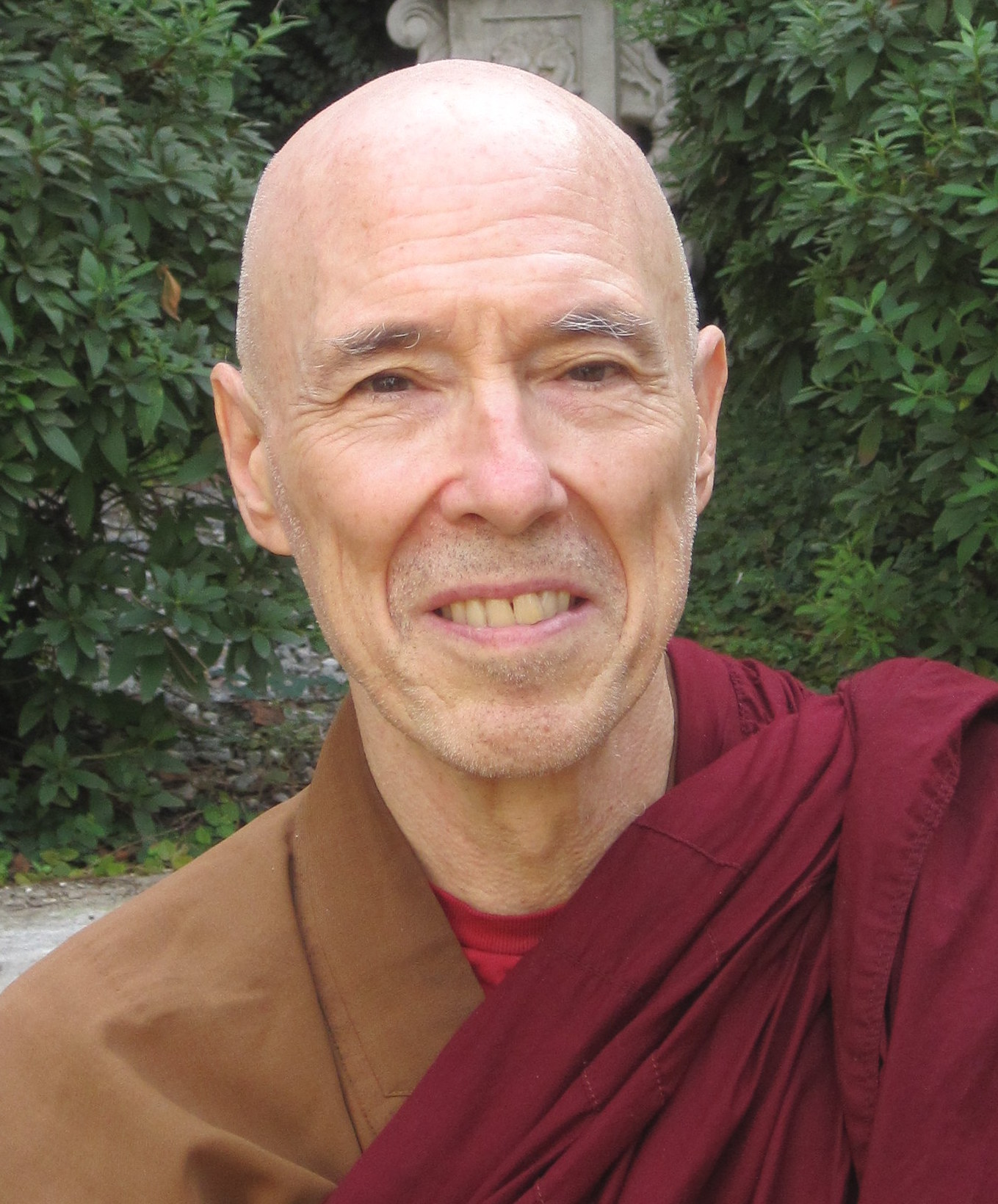
Bhikkhu Bodhi is an American Theravada Buddhist monk and scholar. Born Jeffrey Block in Brooklyn, New York, he was ordained in Sri Lanka in 1972. He is one of the foremost translators of the Pali Canon into English, with acclaimed translations of the Majjhima Nikaya, Samyutta Nikaya, and Anguttara Nikaya. He served as president of the Buddhist Publication Society in Kandy, Sri Lanka. He now lives at Chuang Yen Monastery in New York and is the founder of Buddhist Global Relief, a humanitarian organization.
Teachings
Books
This book contains thirty two numbers of the renowned Bodhi Leaves series, dealing with various aspects of the Buddha’s teaching. 122: To Light a Fire—Webu Sayadaw 123: Radical Therapy—Lily de Silva 124: Nothing Higher to Live For—Bhikkhu Nyanasobhano 125: Prisoners of Karma—Suvimalee Karunaratna 126: Painting the Buddha’s Eyes—Douglas Bullis 127: Family Planning & Birth Control in Buddhist Perspective—Louis van Loon 128: The Short Analysis of Kamma—Venerable Mahathera Nauyane Ariyadhamma 129: The Living Message of the Dhammapada—Bhikkhu Bodhi 130: The Blessed One’s City of Dhamma—I.B. Horner 131: Of Mindsets and Monkeypots—Petr Karel Ontl 132: Ministering to the Sick and the Terminally Ill—Lily de Silva 133: A Taste of the Holy Life—Susan Elbaum Jootla 134: A Journey into Buddhism—Elizabeth J. A. Harris 136: A Good Dose of Dhamma—Tan Acharn Kor Khao-suan-luang 137: The Benefits of Walking Meditation—Sayadaw U Silananda 139: Buddhist Culture, The Cultured Buddhist—Robert Bogoda 140: The Healing of the Bull—Suvimalee Karunaratna 141: Detachment and Compassion in Early Buddhism—Elizabeth J. A. Harris 143: Discourses of the Ancient Nuns—Bhikkhu Bodhi 145: Transmitting the Dhamma—Susan Elbaum Jootla 146: Globalisation from a Buddhist Perspective—Pracha Hutanuwatr and Jane Rasbash 147: The Struggle of Letting Go—Suvimalee Karunaratna 148: Buddhism in a Value-changing Society—P. D. Premasiri 149: In the Presence of Nibbana—Ajahn Brahmavamso 150: Five Visions of a Dying Man—Ven. Rastrapal Mahathera 151: Parents and Children—Ven. Medagama Vajiranana Nayaka Thera 152: The Joy Hidden in Sorrow—Ayya Medhananda 153: The Ending of Things—Ajahn Brahmavamso 154: The Good, The Beautiful, and The True—Bhikkhu Bodhi 155: Right Knowledge—P. D. Premasiri 156: How Free is Freedom of Thought—Sanath Nanayakkara 157: The Bodhisattva Concept—A.G.S. Kariyawasam
This book contains fourteen numbers of the renowned Wheel Publication series, dealing with various aspects of the Buddha’s teaching. 152–4: A Buddhist Catechism — Subhadra Bhikshu (Friedrich Zimmermann); 155–8: Anguttara Nikaya Part I by Nyanaponika Thera and Bhikkhu Bodhi; 159–161: Edwin Arnold — William Peiris; 162–164: Facets of Buddhist Thought — K. N. Jayatilleke; 165–166: The Buddhist Doctrine of Nibbana — Parawahera Vajiranyana Thera and Francis Story
This book contains fourteen numbers of the renowned Wheel Publication series, dealing with various aspects of the Buddha’s teaching. 98: The Noble Quest—I. B. Horner; 199: Human Progress: Reality or Illusion?—Philip M. Eden; 200–201: Buddhism and the Race Question—G. P. Malalasekera; 202–204: The Three Basic Facts of Existence–Collected Essays; 205: The City of the Mind—Nyanaponika Thera; 206–2017: Lay Buddhist Practice—Bhikkhu Khantipalo; 208–211: Anguttara Nikaya—Nyanaponika Thera and Bhikkhu Bodhi; 212–214: Dimensions of Buddhist Thought—Francis Story; 215: Birth, Life and Death of the Ego—Carlo Gragnani.
This book contains fourteen numbers of the renowned Wheel Publication series, dealing with various aspects of the Buddha’s teaching. 281: Colonel Olcott—B. P. Kirthisinghe & M. P. Amarasuriya 282–84: Going for Refuge & Taking the Precepts—Bhikkhu Bodhi 285–86: Buddhism and Social Action—Ken Jones 287–89: Buddhist Stories—Eugene Watson Burlingame 290–91: Buddhism in Psychotherapy—Seymour Boorstein, M.D.& Olaf G. Deatherage, Ph.D 292–93: Buddhist Women at the Time of the Buddha—Hellmuth Hecker 294–95: The Buddhist Layman—R. Bogoda, Susan Elbaum Jootla, and M.O’C. Walshe
This book contains sixteen numbers of the renowned Wheel Publication series, dealing with various aspects of the Buddha’s teaching. 248–9: The Buddha’s Words on Kamma—Nanamoli Thera 250: Concept and Meaning—C.F. Knight & Carlo Gragnani 251–3: The Roots of Good and Evil—Nyanaponika Thera 254–6: Life’s Highest Blessings—Dr. R. L. Soni 257: Meanderings of the Wheel of Dhamma—Nathan Katz 258: The Contemporary Relevance of Buddhist Philosophy—K. N. Jayatilleke 259–60: Nourishing the Roots—Bhikkhu Bodhi 261: Buddhism and Death—M. O’C. Walshe 262: Faith in the Buddha’s Teaching and Refuge in the Triple Gem—Soma Thera 263–4: Maha-Moggallana—Hellmuth Hecker
This book contains fifteen numbers of the renowned Wheel Publication series, dealing with various aspects of the Buddha’s teaching. Wheel Publication No. 265: Buddhism and Society—Heinz Bechert 266–7: Wayfaring—Bhikkhu Sobin S. Namto 268: The Second Discourse of the Buddha—Dr. K. N. G. Mendis 269: The Exposition of Non-Conflict—Bhikkhu Nanamoli 270: Three Symbolic Ways of Life—Carlo Gragnani 271–2: Bag of Bones—Bhikkhu Khantipalo 273–4: Ananda—Hellmuth Hecker 275–6: Buddhism and Christianity: A Positive: Approach—M. O’ C. Walshe 277–8: Transcendental Dependent Arising—Bhikkhu Bodhi 279: Inspiration from the Dhammapada— N. K. G. Mendis 280: The Position of Women in Buddhism—L.S. Dewaraja
This book contains sixteen numbers of the renowned Wheel Publication series, dealing with various aspects of the Buddha’s teaching. Wheel Publication No. 377–79: The Discourse on Right View—Bhikkhu Nanamoli & Bhikkhu Bodhi 380: The Buddha and Christ as Religious Teachers—Lily de Silva 381–83: The Coming Buddha Ariya Metteyya—Saya U Chit Tin / William Pruitt 384–85: The Essential practice Part II—Webu Sayadaw 386–87: The Edicts of King Asoka—S. Dhammika 388–89: Reading the Mind—Tan Acharn Kor / Khao-suan-luang 390–91: The Lion’s Roar—Bhikkhu Nanamoli & Bhikkhu Bodhi 392–93: Violence and Disruption in Society—Elizabeth J. Harris
This book contains seventeen numbers of the renowned Wheel Publication series, dealing with various aspects of the Buddha’s teaching. Wheel Publication: 394–96: Fundamentals of Buddhism—Nyanatiloka Thera 397–98: A Simple Guide to Life—Robert Bogoda 399–01: Buddhism in Myanmar—Roger Bischoff 402–04: Buddhist Ceremonies and Rituals of Sri Lanka—A. G. S. Kariyawasam 405–06: Mahakaccana—Bhikkhu Bodhi 407–08: Nibbana As Living Experience—Lily de Silva 409–11: A Treatise on the Paramis—Bhikkhu Bodhi
This volume brings together 53 essays of Bhikkhu Bodhi previously published by the Buddhist Publication Society in newsletters and other publications. These essays reveal the depth and breadth of Bhikkhu Bodhi's ability to communicate the timeless teachings of the Buddha and his skillful guidance in applying the Dhamma in everyday life.
This new Pariyatti Edition brings together eight essays of Bhikkhu Bodhi, five of which were earlier published in academic journals and volumes, and three not published before. Most of the essays are critical responses to various modern interpretations of the Dhamma that the author considers to be at odds with the Buddha’s teachings, in particular as transmitted and interpreted by the Theravāda school of Buddhism. The other essays are in depth discussions of important Buddhist doctrinal terms.
This book offers a clear, concise account of the Eightfold Path prescribed to uproot and eliminate the deep underlying cause of suffering—ignorance. Each step of the path is believed to cultivate wisdom through mental training, and includes an enlightened and peaceful middle path that avoids extremes. The theoretical as well as practical angles of each of the paths—right view, right intention, right speech, right action, right livelihood, right effort, right mindfulness, and right concentration—are illustrated through examples from contemporary life. The work's final chapter addresses the Buddhist path and its culmination in enlightenment.
The renowned translator Bhikkhu Bodhi has crafted this anthology of suttas from the Samyutta Nikaya to enable students of Early Buddhism to penetrate into the heart of the Buddha’s teachings on the four noble truths and the eightfold path as directly and clearly as possible. The aim is to attain direct insight into foundational Buddhist teachings on liberation. Brilliantly translated by Bhikkhu Bodhi, this anthology of suttas from the Samyutta Nikaya takes us straight to the heart of the Buddha’s teaching on liberation through the four noble truths and the noble eightfold path—the two mainstays of Buddhist doctrine that illuminate the nature of things and generate direct insight into the teachings. These suttas all pertain to the ultimate good, the attainment of nibbana, or liberation. They illuminate the Buddha’s radical diagnosis of the human condition—and more broadly, the condition of all sentient existence—in light of the four noble truths. They underscore the pervasive flaws inherent in the round of rebirths, trace our existential predicament to its deepest roots, and lay out the path to unraveling our bondage and winning irreversible release. Ven. Bodhi arranged the chapters, each with its own introduction, to provide an overview of the Dhamma that mirrors the four noble truths, thus enabling students of Early Buddhism to see into the heart of the Buddha’s teachings as directly and clearly as possible.
Renowned scholar-monk and bestselling translator Bhikkhu Bodhi’s definitive, practical guide on how to read ancient Buddhist texts in the original language. Bhikkhu Bodhi’s sophisticated and practical instructions on how to read the Pali of the Buddha’s discourses will acquaint students of Early Buddhism with the language and idiom of these sacred texts. Here the renowned English translator of the Pali Canon opens a window into key suttas from the Sa?yutta Nikaya, giving a literal translation of each sentence followed by a more natural English rendering, then explaining the grammatical forms involved. In this way, students can determine the meaning of each word and phrase and gain an intimate familiarity with the distinctive style of the Pali suttas—with the words, and world, of the earliest Buddhist texts. Ven. Bodhi’s meticulously selected anthology of suttas provides a systematic overview of the Buddha’s teachings, mirroring the four noble truths, the most concise formulation of the Buddha’s guide to liberation. Reading the Buddha’s Discourses in Pali shares with readers not only exceptional language instruction but also a nuanced study of the substance, style, and method of the early Buddhist discourses.
The first part explores the Buddha’s mission, the second his doctrine and path.
This book offers a clear, concise account of the Eightfold Path prescribed to uproot and eliminate the deep underlying cause of suffering—ignorance. Each step of the path is believed to cultivate wisdom through mental training, and includes an enlightened and peaceful middle path that avoids extremes. The theoretical as well as practical angles of each of the paths—right view, right intention, right speech, right action, right livelihood, right effort, right mindfulness, and right concentration—are illustrated through examples from contemporary life. The work's final chapter addresses the Buddhist path and its culmination in enlightenment.
Know a video or talk by Bhikkhu Bodhi we should add?