About
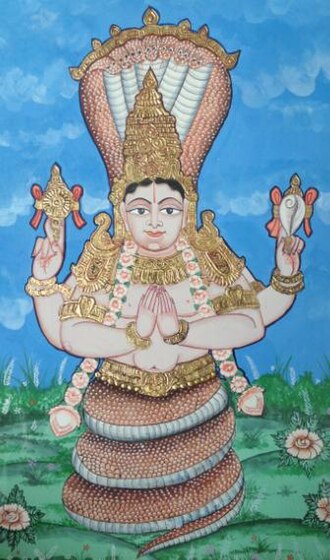
Patanjali is the sage traditionally credited with compiling the Yoga Sutras, the foundational text of Classical Yoga. Writing around the second century BCE, he systematized the eight-limbed path (ashtanga) from ethical conduct through meditation to samadhi. His concise aphorisms have guided contemplative practice across traditions for over two millennia.
Teachings
Videos
Books
This work has been selected by scholars as being culturally important and is part of the knowledge base of civilization as we know it. This work is in the public domain in the United States of America, and possibly other nations. Within the United States, you may freely copy and distribute this work
This edition includes an extensive preface by Swami Vivekananda, the chief disciple of the 19th century mystic Ramakrishna Paramahansa and the founder of the Ramakrishna Math and the Ramakrishna Mission. He gives the reader deep insights about Yoga and the Ultimate Goal in Life. The Yoga Sutras of Patanjali are in themselves exceedingly brief, yet they contain the essence of practical wisdom, set forth in admirable order and detail. The theme, if the present interpreter be right, is the great regeneration, the birth of the spiritual from the psychical man: the same theme which Paul so wisely and eloquently set forth in writing to his disciples in Corinth, the theme of all mystics in all lands. We think of ourselves as living a purely physical life, in these material bodies of ours. In reality, we have gone far indeed from pure physical life; for ages, our life has been psychical, we have been centred and immersed in the psychic nature. Some of the schools of India say that the psychic nature is, as it were, a looking-glass, wherein are mirrored the things seen by the physical eyes, and heard by the physical ears. But this is a magic mirror; the images remain, and take a certain life of their own. Thus within the psychic realm of our life there grows up an imaged world wherein we dwell; a world of the images of things seen and heard, and therefore a world of memories; a world also of hopes and desires, of fears and regrets. Mental life grows up among these images, built on a measuring and comparing, on the massing of images together into general ideas; on the abstraction of new notions and images from these; till a new world is built up within, full of desires and hates, ambition, envy, longing, speculation, curiosity, self-will, self-interest. The teaching of the East is, that all these are true powers overlaid by false desires; that though in manifestation psychical, they are in essence spiritual; that the psychical man is the veil and prophecy of the spiritual man.
Yoga is an exercise and meditation philosophy that has been taking the United States by storm over the past several decades. Yet many are unaware that there is an entire, ancient religion that prefaces this phenomenon. Yoga is one of six orthodox schools of Hindu philosophy, and the "Yoga Sutras of Patanjali" contains 196 aphorisms that form the basis of Raja Yoga. Patanjali uses his text to explain different facets of the philosophy, leading people to achieve Kaivalya, the ultimate goal of detachment. The sutras begin with the most basic concentration, and then progresses to discipline, manifestation, and finally, emancipation of the transcendental ego. Patanjali also explains how one can find the path to Kaivayla with the eight limbs of Yoga; non-violent thoughts, cleanliness, healthy living, meditation, and others are explained as essential actions to achieving self-liberation. Patanjali lived sometime between the 1st century BCE and the 5th century BCE. While all critics agree that Patanjali is the great compiler of the Yoga Sutras, many deliberate about whether or not he created the meditational philosophy. Some even speculate that Patanjali borrowed some of his sutras from other authors. Regardless, the "Yoga Sutras of Patanjali" is now considered to be one of the most important textual sources for the practice of yoga. This edition is printed on premium acid-free paper and is translated with a preface by William Q. Judge.
This valuable book provides a complete manual for the study and practice of Raja Yoga, the path of concentration and meditation. This new deluxe printing of these timeless teachings is a treasure to be read and referred to again and again by seekers treading the spiritual path. The classic Sutras (thought-threads), at least 4,000 years old, cover the yogic teachings on ethics, meditation, and physical postures, and provide directions for dealing with situations in daily life. The Sutras are presented here in the purest form, with the original Sanskrit and with translation, transliteration, and commentary by Sri Swami Satchidananda, one of the most respected and revered contemporary Yoga masters. In this classic context, Sri Swamiji offers practical advice based on his own experience for mastering the mind and achieving physical, mental and emotional harmony.
Know a video or talk by Patanjali we should add?