About
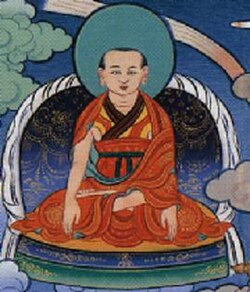
Patrul Rinpoche (1808–1887) was a wandering Tibetan Buddhist master of the Nyingma tradition known for his humility, fierce compassion, and brilliant writing. His 'Words of My Perfect Teacher' is one of the most beloved introductions to Tibetan Buddhist practice. He lived as a homeless yogi despite his fame, teaching in meadows and refusing institutional trappings.
Teachings
Videos
Books
A unique collection of essays, instructions, letters, and personal advice on Dzogchen, Rimé, and other topics by famous Tibetan Buddhist masters of the nineteenth and twentieth centuries. This selection features profound, provocative, and at times humorous texts from some of the leading figures associated with the Rimé tradition of Tibetan Buddhism. The emphasis of these works is on the esoteric path of Dzogchen, or the Great Perfection, through which the nature of reality is pointed out directly, just as it is. Throughout the book the translator provides clear, succinct introductions to the individual translations, expertly setting the scene and guiding the reader through a world of intellectual renaissance, intersectarian debate, and the imparting of cherished insights. Through this, one truth above all becomes apparent: that genuine wisdom means transcending the limited confines of the ordinary mind.
Deity, Mantra, and Wisdom contains four of the most cherished Tibetan Buddhist commentaries on the practices of visualization, mantra recitation, and meditative absorption. These three elements form the core of development stage meditation, one of the most important practices of Buddhist Tantra. The authors of these timeless classics—Jigme Lingpa, Patrul Rinpoche, and Getse Mahapandita—have all profoundly shaped Tibetan Buddhism with their vast scholarship and deep spiritual realization. In these eloquent and inspiring writings, they explain the fundamental philosophy of the development stage, showing not only its profound insights into the nature of reality, but also how to make this view a living experience through the practice of meditation. The four works here translated for the first time are: "Ladder to Akanistha" by Jigme Lingpa, "Clarifying the Difficult Points in the Development Stage" by Patrul Rinpoche, "The Four Stakes That Bind the Life-Force" by Patrul Rinpoche, and "Husks of Unity" by Getse Mahapandita Tsewang Chokdrub.
One of the most important sadhana cycles in the Nyingma school of Tibetan Buddhism, the Rigdzin Düpa, or Gathering of the Vidyadharas, is practiced by tens of thousands of practitioners around the world. This inner guru practice focuses on Padmasambhava as the central figure and is one of the three root sadhanas of the Longchen Nyingtik treasure cycle revealed by the great Jigme Lingpa. This book will help readers mature their practice with invaluable instructions and commentary from some of the greatest Tibetan masters to have ever lived, including Patrul Rinpoche, Jamgön Kongtrul Lödro Tayé, and more. This book is for those who have received the reading transmission for the Rigdzin Düpa. Until such time as you receive the transmission, you can keep it on your shrine.
In this book, two great Tibetan Buddhist masters of the nineteenth and twentieth centuries challenge us to critically examine our materialistic preoccupations and think carefully about how we want to spend the rest of our lives. At the same time, they provide practical guidance in following the Buddhist path, starting from the most basic motivation and culminating in the direct experience of reality beyond the reach of conceptual mind. The root text is a teaching in verse written in the nineteenth century by Patrul Rinpoche, one of the outstanding teachers of his day. In the accompanying commentary, Dilgo Khyentse Rinpoche (1910–1991)—lineage holder of the Nyingma school and one of the great expounders of the Dharma in Europe and North America—expands upon the text with his characteristic compassion and uncompromising thoroughness. Patrul Rinpoche's fresh and piercing verses combined with Khyentse Rinpoche's down-to-earth comments offer a concise yet complete examination of the Buddhist path.
From the author of Words of My Perfect Teacher comes this commentary on the teachings of Aro Yeshe Jungne—an insightful introduction to Dzogchen meditation, the Nyingma tradition, and the basics of Buddhism Patrul Rinpoche, the beloved nineteenth-century master best known for Words of My Perfect Teacher, collected the teachings of the tenth-century adept Aro Yeshe Jungne and synthesized them into the short text translated here as Clear Elucidation of True Nature. How to put these essential teachings into practice is the subject of the lively commentary by the two Khenpo brothers, the late Khenchen Palden Sherab Rinpoche and Khenpo Tsewang Dongyal Rinpoche. The Dzogchen meditation instructions of the Aro lineage are divided into nine sets, or nine levels, with specific instructions for each on how to identify the nature of the mind, how to abide in it as a way of life, and how to liberate turbulent thoughts and emotions when they arise. The commentary enfolds this instruction into a broad general teaching suitable for beginners that serves as an introduction to Dzogchen meditation, to the Nyingma tradition, and to basic Buddhism.
Follow the timeless wisdom in these four newly translated texts from Tibetan masters and “happiness, a sense of well-being, and all other forms of excellence will rise before you.” Drawn from a long tradition of secular Tibetan teachings on how to live a good life, these four texts from Tibetan masters provide clear and succinct instructions for creating happiness, success, harmonious relationships, and just communities. In the spirit of the writings of the Stoics, Dale Carnegie, Stephen R. Covey, Viktor Frankl, Don Miguel Ruiz, and others, these texts reveal that for centuries, Tibetan wisdom has extolled principles and values like honest communication, integrity, decency, fairness, reliability, respect, and generosity as the foundation for a good life. Translated by meditation master Orgyen Chowang Rinpoche, founder of the Pristine Mind Foundation, the collection includes an 8th-century scroll from the Dunhuang caves as well as writings from some of the greatest luminaries of the Tibetan tradition: Sakya Pandita (1182–1251), Jamgon Mipham Rinpoche (1846–1912), and Patrul Rinpoche (1808–1887). With a message that’s more relevant than ever in our chaotic, disconnected times, The Tibetan Book of Success explains how leaders, entrepreneurs, parents, young adults, and anyone interested in improving themselves and the world can develop the compassion and wisdom required to do so in a fair and responsible way.
The definitive companion guide to Patrul Rinpoche’s Words of My Perfect Teacher, the classic text on Tibetan Buddhist practices and teachings This guide provides readers with essential background information for studying and practicing with Patrul Rinpoche's Words of My Perfect Teacher—the text that has, for more than a century, served as the reliable sourcebook to the spiritual practices common to all the major schools of Tibetan Buddhism. By offering chapter-by-chapter commentary on this renowned work, Khenpo Pelzang provides a fresh perspective on the role of the teacher; the stages of the path; the view of the Three Jewels; Madhyamika, the basis of transcendent wisdom; and much more.
Know a video or talk by Patrul Rinpoche we should add?