About
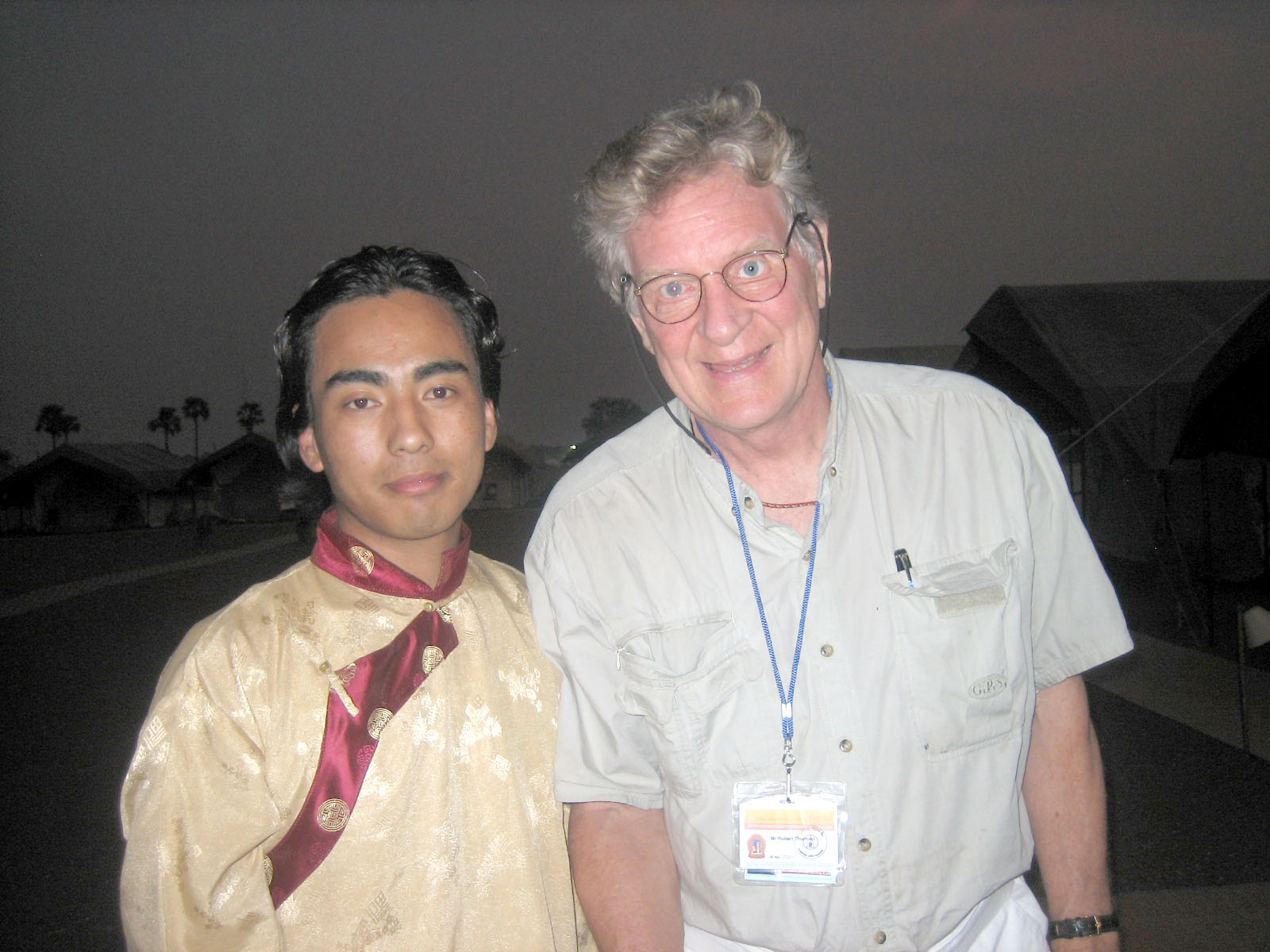
Robert Thurman is a professor of Buddhist Studies at Columbia University and one of the foremost Western scholars of Tibetan Buddhism. He was the first Westerner ordained as a Tibetan Buddhist monk by the Dalai Lama, though he later returned to lay life. He is co-founder of Tibet House US in New York City and has authored numerous books including 'Inner Revolution' and translations of key Tibetan Buddhist texts. He is known for making Tibetan Buddhist philosophy accessible to Western audiences.
Teachings
Books
Heated words, cool malice, deadly feuds, the furious rush of adrenaline-anger is clearly the most destructive of the seven deadly sins. It can ruin families, wreck one's health, destroy peace of mind and, at its worst, lead to murder, genocide, and war. In Anger, Robert A. F. Thurman, best-selling author and one of America's leading authorities on Buddhism and Eastern philosophy, offers an illuminating look at this deadliest of sins. In the West, Thurman points out, anger is seen as an inevitable part of life, an evil to be borne, not overcome. There is the tradition of the wrathful God, of Jesus driving the money-changers from the temple. If God can be angry, how can men rid themselves of this destructive emotion? Thurman shows that Eastern philosophy sees anger differently. Certainly, it is a dreadful evil, one of the "three poisons" that underlie all human suffering. But Buddhism teaches that anger can be overcome. Indeed, the defeat of anger is not only possible, but also the only thing worth doing in a lifetime. Thurman shows how to recognize the destructiveness of anger and understand its workings, and how we can go from being a slave to anger to becoming "a knight of patience." We discover finally that when this deadliest emotion is transmuted by wisdom, it can become the most powerful force in freeing us from human suffering. Drawing on the time-tested wisdom of Buddhism, Robert A. F. Thurman ranges from the individual struggle with anger to global crises spurred by dogmatic ideologies, religious fanaticism, and racial prejudice. He offers a path of calm understanding in a time of terrorism and war.
The most prominent expert on Buddhism in the West presents his most importantteaching and meditation practice for everyday life.
WINNER OF THE TRICYCLE PRIZE FOR EXCELLENCE Expertly and lucidly surveying the basic varieties and teachings of Tibetan Buddhism, renowned scholar Robert Thurman makes this authentic spiritual tradition available to contemporary Western audiences
One of Time magazine's 25 Most Influential People in America writes about taking responsibility for our own happiness and our actions. Robert Thurman is America's most popular and charismatic Buddhist. His first book, Inner Revolution, is an international bestseller and his lectures sell out to thousands. Infinite Life demonstrates that our every action has infinite consequences for ourselves and others, here and now and after we are gone. He introduces the Seven Paths to reconstructing body and mind carefully in order to reduce the negative consequences and cultivate the positive. In his powerful, pragmatic style, Thurman delivers life-changing lessons on virtues and emotions through the lens of Buddhist practices and ways of thinking. He invites us to take responsibility for our actions and their consequences while we revel in the knowledge that our lives are truly infinite. Infinite Life is the ultimate guidebook to understanding our place in the universe and realizing how we can personally succeed while helping others.
The New York Times calls him "America's number one Buddhist." He is the co-founder of Tibet House New York, was the first American Tibetan Buddhist monk, and has shared a thirty-five-year friendship with the Dalai Lama. Now, Robert Thurman presents his first completely original book, an introduction
When people and circumstances upset us, how do we deal with them? Often, we feel victimized. We become hurt, angry, and defensive. We end up seeing others as enemies, and when things don't go our way, we become enemies to ourselves. But what if we could move past this pain, anger, and defensiveness?
What is the subtle relationship between mind and body? What can today's scientists learn about this relationship from masters of Buddhist thought? Is it possible that by combining Western and Eastern approaches, we can reach a new understanding of the nature of the mind, the human potential for growth, the possibilities for mental and physical health? MindScience explores these and other questions as it documents the beginning of a historic dialogue between modern science and Buddhism. The Harvard Mind Science Symposium brought together the Dalai Lama and authorities from the fields of psychiatry, psychology, neuroscience, and education. Here, they examine myriad questions concerning the nature of the mind and its relationship to the body.
This is the paperback edition of the first full study, translation, and critical annotation of the Essence of True Eloquence by Jey Tsong Khapa (1357-1419), universally acknowledged as the greatest Tibetan philosopher. Robert Thurman's translation and introduction present a strain of Indian Buddhist
Few teachers in the West possess both the spiritual training and the scholarship to lead us along the path to enlightenment. Robert Thurman is one such teacher. Now, in his first experiential course on the essentials of Tibetan Buddhism, adapted and expanded from a popular retreat he led, Thurman --
His Holiness the Dalai Lama is an extraordinary example of a life dedicated to peace, communication, and unity. What he represents, and what he has accomplished, heals and transcends the current tensions between Tibet and China. Why the Dalai Lama Matters explores just why he has earned the world's love and respect, and how restoring Tibet's autonomy within China is not only possible, but highly reasonable, and absolutely necessary for all of us together to have a peaceful future as a global community. In the few decades since the illegal Chinese invasion of Tibet, Tibetans have seen their ecosystem destroyed, their religion, language, and culture repressed, and systematic oppression and violence against anyone who dares acknowledge Tibetan sovereignty. Yet, above it all, the Dalai Lama has been a consistent voice for peace, sharing a "Middle-Way" approach that has gathered accolades from the Nobel Peace Prize to the U.S. Congressional Gold Medal. Modeling this peaceful resistance shows the world that nobody is free unless everybody is free -- and that a solution exists that can benefi t all parties, not just one. And more than just his nation have taken notice. His inter-religious dialogues, honest, humble demeanor, and sense of compassionate justice sets him apart in a world at war with itself. When China changes policy and lets Tibetans be who they are, Tibet can, in turn, join with China in peaceful coexistence. Why the Dalai Lama Matters is not merely a book about Tibet or the Dalai Lama. It is a revealing, provocative solution for a world in confl ict, dealing with the very fundamentals of human rights and freedoms. By showing the work that the Dalai Lama has done on behalf of his people, Thurman illuminates a worldwide call to action, showing that power gained by might means nothing in the face of a determined act of truth.
"Robert Thurman is a living treasure, one of today's most provocative spiritual thinkers." - Daniel Goleman, author of Emotional Intelligence Robert Thurman, the preeminent scholar and interpreter of Tibetan Buddhist philosophy for the modern world, leads us on a joyful exploration into the nature of reality through Buddha's threefold curriculum of "super-education." "Buddha had to be an educator, rather than a prophet or religion founder, since he had achieved his goal of exact and complete understanding of reality by using reason, experiments to open his own mind, and vision to do so," Thurman writes. "From his own experience, he could help [others] as a teacher by streamlining the process. He could not just transplant his realization into their minds. They could not get their own realizations just by believing whatever he said. He could only provide them with a prospect of full realization along a path of learning and experiencing they could follow-they would have to travel on their own." This book is your invitation to travel that same road. Deeply felt and bracingly direct, it doesn't teach about the teaching-it is the teaching. Get ready to get real, and have fun along the way, as you chart a path to reliable, lasting happiness.
Know a video or talk by Robert Thurman we should add?