About
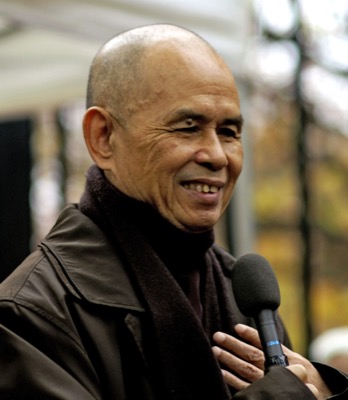
Thich Nhat Hanh (1926–2022) was a Vietnamese Zen Buddhist monk, peace activist, and one of the most influential spiritual leaders of the modern era. He was a pioneer of engaged Buddhism and founded the Plum Village tradition. Exiled from Vietnam for his peace activism during the war, he was nominated for the Nobel Peace Prize by Martin Luther King Jr. He authored over 100 books including 'The Miracle of Mindfulness' and 'Peace Is Every Step.' He founded monasteries worldwide including Blue Cliff Monastery and Deer Park Monastery in the US.
Students
Teachings
Books
Thich Nhat Hanh shares 81 personal life stories with his signature simplicity and humor—illustrating his most essential teachings on mindfulness, peace, and social engagement. Collected here for the first time, these personal, autobiographical stories from peace activist and Zen Master Thich Nhat Hanh perfectly illustrate his most essential teachings. The beauty of these simple lessons is that readers do not need to be versed in meditation or Buddhist practices to find peace, sanctuary, and sustenance here. Told with his signature clarity and humor, these stories are drawn from the long span of Thich Nhat Hanh's life, from his childhood in rural Vietnam to his years as a teenaged novice, and as a young teacher and writer in his war-torn home country. Readers will also join Nhat Hanh on his later travels around the world teaching mindfulness, making pilgrimages to sacred sites, and meeting with world leaders. This inspiring read follows in the tradition of Zen teaching stories—dharma—that goes back at least to the time of the Buddha. Thich Nhat Hanh uses storytelling to share important teachings, insights, and life lessons.
A collection of poetry by the renowned Zen meditation teacher, peace activist, and author of The Miracle of Mindfulness Though he is best known for his groundbreaking and accessible works on applying mindfulness to everyday life, Thich Nhat Hanh is also a distinguished poet and Nobel Peace Prize nominee. This stunning poetry collection explores these lesser-known facets of Nhat Hanh’s life, revealing not only his path to becoming a Zen meditation teacher but his skill as a poet, his achievements as a peace activist, and his experiences as a young refugee. Through over fifty poems, Nhat Hanh reveals the stories of his past—from his childhood in war-torn Vietnam to the beginnings of his own spiritual journey—and shares his ideas on how we can come together to create a more peaceful, mindful world. Uplifting, insightful, and profound, Call Me By My True Names is at once an exquisite work of poetry and a portrait of one of the world’s greatest Zen masters and peacemakers. “The clear, still mind of this meditation teacher gives rise to piercing images time and time again. Nhat Hanh seems an inherently skilled poet. It is these poetic works, more than his essays or lectures, that show Thich Nhat Hanh clearly to be a Zen mystic.” —San Francisco Chronicle "Thich Nhat Hanh's poems have an almost uncanny power to disarm delusion, awaken compassion, and carry the mind into the immediate presence of meditation. Thich Nhat Hanh writes with the voice of the Buddha". - Sogyal Rinpoche.
We can restore our inherent connection to nature, each other, our ancestors, and ourselves, and remember our fundamental gift of belonging. The eighth book in the bestselling Mindfulness Essentials series, a back-to-basics collection from world-renowned Zen master Thich Nhat Hanh that introduces everyone to the essentials of mindfulness practice. "We are here to awaken from the illusion of our separateness."—Thich Nhat Hanh With our world experiencing the deep effects of loneliness, environmental detachment, and digital overload, this pocket-sized How To book reminds us of our crucial need to connect to ourselves, our ancestors, and our planet. Written with characteristic simplicity and kindness, these wise meditations teach us how to remember, at any time, our fundamental gift of belonging. Illustrated with playful sumi-ink drawings by California artist Jason DeAntonis.
Thich Nhat Hanh invites you to a joyful, sustainable relationship with eating in this pocket-sized guide full of Zen inspiration and practical mindfulness tools. In short meditations, Zen Master Thich Nhat Hanh covers everything from eating with others and enjoying our food to connecting with the Earth. He inspires a joyful and sustainable relationship with all aspects of eating, including gardening, food shopping, preparing, serving, and even cleaning up after a meal. Part of the Mindfulness Essentials series and featuring illustrations by Jason DeAntonis, How to Eat is a welcome reminder that the benefits of mindful eating are both personal and global.
‘The monk who taught the world mindfulness' Time How to Listen is part of a charming series of books from Zen Master Thich Nhat Hanh, exploring the essential foundations of mindful meditation and practice. In How to Listen, Thich Nhat Hanh demonstrates how deep listening is a fundamental building block of good communication. With clear and gentle guidance, we learn how truly listening – to ourselves, to each other, to Mother Earth, and to the many ‘bells of mindfulness’ that are available to us in each moment – is the foundation of our practice, an expression of love and a solution to our deepest and most urgent large-scale conflicts.
Discover the bestselling Mindfulness Essentials series—a back-to-basics collection by Zen Master Thich Nhat Hanh that reveals the essentials of mindfulness practice. Reach true clarity and insight by looking deeply, minimizing misperceptions, and having the courage to see things as they really are.
Never-before-published commentaries and personal reflections of the great Zen master on living in stillness and timelessness Thich Nhat Hanh shares the essence of his lifetime of spiritual seeking in this intimate and poetic work, inspired by the classic text Being Time by thirteenth-century Japanese Master Dogen. Inside the Now begins with an autobiographical reflection in which we hear the voice of the young monk, poet, and community-builder struggling in war-torn Vietnam to develop a Buddhism relevant to the suffering of his time. These early experiences lay the groundwork for Thich Nhat Hanh’s insights into the nature of time and interbeing. In part two, we hear the clear, direct voice of the Zen master challenging us to open our hearts, seize the moment, and touch the now. A beautifully designed and personal book that will be cherished for generations, Inside the Now is interspersed with poetry from other Zen masters as well as the author’s own verse and calligraphy.
The world-renowned Zen monk argues for a more mindful, spiritual approach to environmental protection and activism—one that recognizes people and planet as one and the same While many experts point to the enormous complexity in addressing issues ranging from the destruction of ecosystems to the loss of millions of species, Thich Nhat Hanh identifies one key issue as having the potential to create a tipping point. He believes that we need to move beyond the concept of the “environment,” as it leads people to experience themselves and Earth as two separate entities and to see the planet only in terms of what it can do for them. Thich Nhat Hanh points to the lack of meaning and connection in peoples’ lives as being the cause of our addiction to consumerism. He deems it vital that we recognize and respond to the stress we are putting on the Earth if civilization is to survive. Rejecting the conventional economic approach, Nhat Hanh shows that mindfulness and a spiritual revolution are needed to protect nature and limit climate change. Love Letter to the Earth is a hopeful book that gives us a path to follow by showing that change is possible only with the recognition that people and the planet are ultimately one and the same.
The secret to happiness is to acknowledge and transform suffering, not to run away from it. Here, Thich Nhat Hanh offers practices and inspiration transforming suffering and finding true joy. Thich Nhat Hanh acknowledges that because suffering can feel so bad, we try to run away from it or cover it up by consuming. We find something to eat or turn on the television. But unless we’re able to face our suffering, we can’t be present and available to life, and happiness will continue to elude us. Nhat Hanh shares how the practices of stopping, mindful breathing, and deep concentration can generate the energy of mindfulness within our daily lives. With that energy, we can embrace pain and calm it down, instantly bringing a measure of freedom and a clearer mind. No Mud, No Lotus introduces ways to be in touch with suffering without being overwhelmed by it. "When we know how to suffer," Nhat Hanh says, "we suffer much, much less." With his signature clarity and sense of joy, Thich Nhat Hanh helps us recognize the wonders inside us and around us that we tend to take for granted and teaches us the art of happiness.
This is the ebook version of One Buddha Is Not Enough. How do we learn to believe in ourselves and not just rely on our spiritual teachers? Based on a retreat that Zen Master Thich Nhat Hanh organized but then couldn't attend, One Buddha Is Not Enough is a book on how to become your own teacher and create your own community where you might least expect it. It offers fresh and original insight from emerging Buddhist teachers on topics such as how to handle grief, strengthen our relationships with family and friends, deal with anger and other strong emotions, and find happiness in the present moment. Through letters, stories, poems, calligraphies, and photographs, Thich Nhat Hanh shares his unique insights on illness, health, and different healing modalities. One Buddha Is Not Enough is a true expression of American Buddhism. We already contain all the insight and wisdom we need--and we're surrounded by the people who can help us on our journey. Sometimes all it takes is a wake-up call to remind us of what we are capable.
This easily accessible translation and commentary by Thich Nhat Hanh on the Sutra on Knowing the Better Way To Live Alone, is the earliest teaching of the Buddha on living fully in the present moment. "To live alone" doesn’t mean to isolate oneself from society. It means to live in mindfulness: to l
In the rush of modern life, we tend to lose touch with the peace that is available in each moment. World-renowned Zen master, spiritual leader, and author Thich Nhat Hanh shows us how to make positive use of the very situations that usually pressure and antagonize us. For him a ringing telephone can be a signal to call us back to our true selves. Dirty dishes, red lights, and traffic jams are spiritual friends on the path to “mindfulness”—the process of keeping our consciousness alive to our present experience and reality. The most profound satisfactions, the deepest feelings of joy and completeness lie as close at hand as our next aware breath and the smile we can form right now. Lucidly and beautifully written, Peace Is Every Step contains commentaries and meditations, personal anecdotes and stories from Nhat Hanh’s experiences as a peace activist, teacher, and community leader. It begins where the reader already is—in the kitchen, office, driving a car, walking a part—and shows how deep meditative presence is available now. Nhat Hanh provides exercises to increase our awareness of our own body and mind through conscious breathing, which can bring immediate joy and peace. Nhat Hanh also shows how to be aware of relationships with others and of the world around us, its beauty and also its pollution and injustices. The deceptively simple practices of Peace Is Every Step encourage the reader to work for peace in the world as he or she continues to work on sustaining inner peace by turning the “mindless” into the mindFUL.
Meditations for profoundly reshaping our focus, mindset, and healing journey—discover the freedom and lightness that comes with leading with gratitude over fear and trauma “The Art of Living offers an exit ramp from the madness of modern-day overdrive, and just might let us grasp the heaven on Earth.” —The Chicago Tribune A revered spiritual leader’s legacy lives on in this wise and rich spiritual guide that shows us how finding true nirvana—existing deeply and peacefully every day—is more attainable than we ever imagined. Especially in turbulent times, there is an urgency to understand ourselves and our world. In the process, hushing our internal chatter and anxieties can feel nearly impossible. We exist trapped in a cycle of worry and stress—desperately searching for a cure and for an ounce of calm. In The Art of Living, renowned Buddhist Thich Nhat Hanh shows us that, often, we are in our own way, and that by changing the way we think and process our emotions and experiences can permanently change the way we find joy and meaning in our lives. Containing the essence of the Buddha’s teachings and Nhat Hanh’s poignant, timeless, and clarifying prose, The Art of Living provides seven transformative mediations that open new perspectives on our lives, our relationships, and our interconnectedness with the world around us. These transformative meditations concentrate on the concepts of: · Emptiness · Singlessness · Aimlessness · Impermanence · Non-Craving · Letting Go · Nirvana Through these, Nhat Hanh describes how spirituality is not a religion. It is a path for us to generate happiness, understanding, and love, so we can live deeply in each moment of our life. “Happiness is not something that arrives in a package in the mail. Happiness does not fall out of the sky. Happiness is something we generate with mindfulness.” —Thich Nhat Hanh
"Power is good for one thing only: to increase our happiness and the happiness of others. Being peaceful and happy is the most important thing in our lives and yet most of the time we suffer, we run after our cravings, we look to the past or the future for our happiness." Turning our conventional understanding of power on its head, world-renowned Zen master, spiritual leader, and national bestselling author Thich Nhat Hanh reveals how true power comes from within. What we seek, we already have. Whether we want it or not, power remains one of the central issues in all of our lives. Every day, each of us exercises power in many ways, and our every act subtly affects the world we live in. This struggle for control and authority permeates every aspect of our private and public lives, preventing us from attaining true happiness. The me-first mentality in our culture seeps unnoticed into our decisions and choices. Our bottom-line approach to getting ahead may be most visible in the business world, but the stress, fear, and anxiety it causes are being felt by people in all walks of life. With colorful anecdotes, precise language, and concrete practices, Thich Nhat Hanh illustrates how the current understanding of power leads us on a never-ending search for external markers like job title or salary. The Art of Power boldly challenges our assumptions and teaches each of us how to access the true power that is within our grasp.
A pocket-sized treasury of writings and teachings from the beloved Zen teacher Thich Nhat Hanh Since Thich Nhat Hanh’s exile from his native Vietnam in 1966, the Zen Buddhist monk has gone on to become one of the most influential and beloved spiritual masters of our age. The seeming simplicity of his words belies the power of his ability to touch the heart and mind, and to inspire spiritual practice. Known for his warm, generous, and joyful teaching style, Hanh has made his wisdom remarkably accessible and resonant to readers across the globe. Now, that wisdom has been compiled into one pocket-sized collection featuring his most powerful and inspiring teachings. Taken from his many published works, these selections make up a concise introduction to the Hanh’s major themes—such as mindfulness, enlightenment, and compassion—and distill his teachings on the transformation of individuals, relationships, and society. The Shambhala Pocket Library is a collection of short, portable teachings from notable figures across religious traditions and classic texts. The covers in this series are rendered by Colorado artist Robert Spellman. The books in this collection distill the wisdom and heart of the work Shambhala Publications has published over 50 years into a compact format that is collectible, reader-friendly, and applicable to everyday life.
This sequel to The Miracle of Mindfulness offers accessible, eye-opening guidance for spiritual seekers on the path from mindfulness to true insight The Sun My Heart is one of Thich Nhat Hanh’s most beloved books. Using the objects and events of everyday life in his hermitage in Plum Village—the gra
Drawn from more than twenty of the books of Thich Nhat Hanh, these are the essential writings of one of the most popular spiritual writers of today. Thought-provoking and inspiring, this selection is aimed at the mind, body and spirit.-- Provided by publisher.
Thich Nhat Hanh pulls from 50 classic Buddhist verses to present the basic teachings of Buddhist applied psychology, exploring the true nature of our feelings and perceptions. Based on the 50 verses on the nature of consciousness taken from the great 5th-century Buddhist master Vasubandhu and the teachings of the Avatamsaka Sutra, Thich Nhat Hanh focuses on the direct experience of recognizing, embracing, and looking deeply into the nature of our feelings and perceptions. Presenting the basic teachings of Buddhist applied psychology, Understanding Our Mind shows us how our mind is like a field, where every kind of seed is planted—seeds of suffering, anger, happiness, and peace. The quality of our life depends on the quality of the seeds in our mind. If we know how to water seeds of joy and transform seeds of suffering, then understanding, love, and compassion will flower. Vietnamese Zen Master Thuong Chieu said, “When we understand how our mind works, the practice becomes easy.”
365 practical, powerful teachings for daily inspiration on how mindfulness can transform our lives and the greater world—from the beloved Zen teacher and author of No Mud, No Lotus “Thich Nhat Hanh shows us the connection between personal inner peace and peace on earth.” —His Holiness the Dalai Lama Bringing the energy of true presence into our lives really does change things for the better—and all it takes is a little training. This treasury of 365 gems of daily inspiration is for anyone who wants to train to meet every moment of life with 100 percent attention. Beloved spiritual teacher Thich Nhat Hanh draws from the his best-selling works to offer powerful and transformative words of wisdom that reflect the great themes of his teachings: how the practice of mindfulness brings joy and insight into every moment of our lives; how to transcend fear and other negative emotions; how to transform our relationships through love, presence, and deep listening; and how to practice peace for our world. Inspiring, joyful, and deeply insightful, Your True Home shows how practicing mindfulness can improve every area of our lives—and how its benefits radiate beyond us to affect others and the whole, larger world.
Know a video or talk by Thich Nhat Hanh we should add?